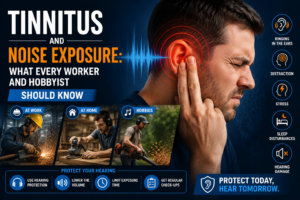
The traditional economic model of hearing healthcare is experiencing a quiet but undeniable shift. For decades, private practices relied almost exclusively on a reactive business model: a patient noticed significant hearing difficulties, walked into a clinic for a diagnostic evaluation, and was fitted with a traditional hearing aid. While clinical rehabilitation remains a foundational pillar of the profession, forward-thinking practitioners are realizing that relying solely on device sales to a single demographic is a restrictive strategy in an evolving marketplace.
To build a resilient, future-proof practice, professionals must look beyond clinical walls to a rapidly expanding, highly profitable ecosystem: recreational audiology. This specialized frontier focuses on delivering premium, customized hearing conservation solutions to active individuals engaged in high-noise hobbies. By shifting the conversation from treatment to proactive prevention, hearing professionals can unlock entirely new revenue streams, diversify their client portfolios, and tap into passionate consumer communities eager for high-performance protection.
High-Noise Environments: Tapping into Passionate Communities
Recreational audiology is uniquely profitable because it connects your practice with consumer segments that are already highly invested in their hobbies. These individuals do not view hearing protection as a medical chore; they view it as an essential piece of performance gear.
Several high-noise verticals represent massive, underserved markets ripe for professional outreach:
- Shooting Sports and Hunting: Modern sportsmen and competitive shooters require sophisticated solutions. They need impulse-noise suppression to protect against gunfire, but they also demand enhanced situational awareness to hear ambient wilderness sounds or range commands.
- Motorsports and Motorcycling: Motorcyclists and auto-racing enthusiasts face continuous, exhausting wind and engine noise that easily exceeds safe decibel thresholds. Custom-molded filters provide long-term comfort beneath helmets while preserving environmental awareness.
- Aviation and Private Flying: Pilots and aviation hobbyists operate in environments dominated by prolonged engine roar. Specialized communication headsets and custom ear-level interfaces are critical for maintaining clear radio compliance and reducing fatigue.
- Music and Live Entertainment: Musicians, audio engineers, and concertgoers represent a community where hearing is literally a livelihood or a primary passion. They demand flat-attenuation high-fidelity filters that lower the volume safely without distorting the rich frequency dynamics of the music.
The Economics of Prevention vs. Rehabilitation
Why is this frontier so financially attractive for a modern practice? The answers lie in cash-pay sustainability, lower barrier-to-entry acquisition costs, and long-term customer lifetime value.
1. High-Margin, Cash-Pay Revenue
Unlike traditional hearing aid fittings, which frequently involve complex insurance billing, third-party managed care discounts, and lengthy trial periods, recreational audiology products such as custom-molded earplugs, electronic shooting protection, and filtered musician plugs are clean, out-of-pocket retail transactions. This significantly improves clinic cash flow and eliminates administrative overhead.
2. Capturing a Younger Demographic
The typical clinical patient is often retirement age or older, frequently waiting up to seven years from the onset of hearing loss before seeking professional help. Recreational audiology attracts active adults in their 20s, 30s, and 40s. Introducing these younger clients to your practice establishes your brand as a modern wellness authority early in their lives.
3. Building Lifelong Patient Pathways
A hobbyist who visits your clinic today for a digital ear scan and a pair of custom motorsports filters becomes a permanent entry in your database. As they age, experience lifestyle shifts, or eventually require diagnostic hearing evaluations and conservation monitoring, they will naturally return to the trusted specialist who helped them protect their passions.
Moving Beyond Generic Foam Plugs
To successfully capture this frontier, professionals must position themselves above the consumer retail market. Cheap, one-size-fits-all foam earplugs and passive industrial muffs are designed for an era that prioritized low cost over verified performance. They muffle sound, ruin communication clarity, and are notoriously uncomfortable for long-term wear.
This is where your clinical expertise becomes the ultimate competitive differentiator. By offering sophisticated, programmable options, smart hearing protection devices, and precise fit-verification, you elevate your practice from a product vendor to a trusted wellness leader. When a consumer experiences a premium solution tailored specifically to the unique contours of their ear and the exact acoustic demands of their sport, returning to generic alternatives becomes completely unjustifiable.
Action Steps: How to Activate the Frontier
Expanding into this profitable market does not require a total overhaul of your existing facility. It simply requires taking your expertise outside the traditional clinical box:
- Form Strategic Partnerships: Reach out to local rod and gun clubs, motorcycle dealerships, flight schools, and local music venues. Offer on-site educational seminars or custom-impression clinics.
- Update Your Marketing Narrative: Dedicate a distinct section of your website and digital marketing to recreational lifestyle solutions. Speak the language of performance, safety, and gear enhancement.
- Leverage Digital Scanning: Implement advanced digital ear-scanning technology. Storing a client’s digital ear geometry indefinitely makes ordering replacement filters or specialized hybrid systems seamless and highly efficient.
Final Thoughts: Sharpening the Practice Axe
There is a classic industry metaphor of a woodcutter who becomes so consumed by chopping wood that he refuses to pause and sharpen his axe. He works harder and harder, but his progress slows as his tools dull.
Relying solely on traditional, reactive hearing aid sales in an increasingly crowded, over-the-counter retail market is the equivalent of chopping with a dull blade. Embracing recreational audiology is how you sharpen the axe. It allows you to pause, diversify your offerings, target fresh demographics, and step boldly into an exciting, high-margin frontier where your expertise creates measurable, lifelong value.